



2024 IEEE Vice-President-Elect, Member and Geographic Activities

Antonio Luque
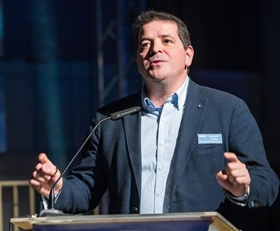
Antonio Luque
IEEE Vice President-Elect, Member and Geographic Activities
Antonio Luque currently holds the position of Associate Professor in the Department of Electronics Engineering, University of Seville, Spain. He has authored more than 20 journal papers, 40 conference papers, 3 book chapters, and a text book, in addition to supervising two Ph.D. students. He has been invited researcher and teacher at the Swiss Federal Institute of Technology Lausanne (Switzerland), Auburn University (AL, USA), Delft University of Technology (Netherlands), Jade University (Germany), Harbin Institute of Technology (China) and Tech Institute of Monterrey (Mexico). At management level, he has been in charge of international relationships, academic affairs, and degree strategic planning and supervision, in different terms.
Besides positions in standing committees of IEEE, he has served in Board AdHocs on Guiding the IEEE Constitutional Amendment, on IEEE Humanitarian Efforts, on IEEE as Your Professional Home, and on Membership Dues, in TAB AdHocs on Bounded Rationality, and on Society Elections, in FinCom AdHoc on Alternative Funding to OUs, in MGA AdHocs on Region Realignment and on Student Branches, among others. He has been active in MGA (Region Director, MGA Committee Chair and member), TAB (Society VP, IEEE Conferences Committee, conference general chair and other roles), PSPB (member of PSC, editor of journals), SA (IEEE high-level participant at WSIS), the new HTB (member of Finance Committee), and at IEEE level committees (Audit, Governance, European Public Policy). He was part of the IEEE Executive Search Committee, who performed the search for a new Executive Director in 2022, being part of the selected team that worked with the search firm that ultimately led to the hiring of the current ED and COO.
Qualifications
In my opinion my experience in IEEE qualifies me for the role of VP Member and Geographic Activities. I have participated in virtually all areas of MGA: in member development (as Chair and member of MRRC and member of YP ExCom), in IT (as member of ITCO), in GUOS (as Section Chair and in Chapter support from Societies), and of course as Region Director and member of the MGA Board. I can also say that have a very wide knowledge of all IEEE and our global structure thanks to my three years in the IEEE Audit Committee (one as Chair), my experience in the Technical Activities part of IEEE, being Society Vice President twice, and by being member of Governance Committee and Conferences Committee, among others.
During my volunteering I have tried to make use of my best personal abilities, which I think also qualify me for the position sought. I consider myself able to reach agreements and to collaborate with others, ready to think strategically and goal-oriented, and to focus on solving real problems. I’m hard working, dedicated to the mission, and trustworthy in the commitments, honest and transparent. One important qualification in these days is that I’m not afraid of change. In the current times, IEEE must be prepared for changes and I am able to be open to them and to propose modifications to our processes and structure, in collaboration with others so that we can continue serving our members and the society in general.
Major Accomplishments
In my 20+ years of IEEE volunteering I believe I have contributed to many areas of the organization, improving each of them. Below I'm listing some accomplishments for IEEE and for different OUs:
As Region 8 Director, I appointed the first AdHoc Committee on Diversity among all Regions, designed initiatives to help professional members develop their careers, and to engage students in interesting contests based on technology, and launched the initiative on educational programs in local languages in the Region.
At MGA participated actively in the Region Realignment effort, contributing some of the key ideas and proposed actions, that led to the ultimate approval of the concept by the Board of Directors.
As Chair of the Audit committee we worked to improve auditing in conferences, cybersecurity and employment practices. I also worked evaluating a proposed Constitutional amendment, determining its financial and operational implications and writing the official statement by FinCom and AudCom together with the Treasurer.
As Chair of MGA MRRC I deployed the first retention and recruitment goals for all Sections. As member of MGA ITCO, I contributed to the design of OU Analytics user interface, and to the redesign of enotices, allowing personalization.
In Societies, as IES Vice President for Workshops, I managed more than 20 international events yearly, creating for the first time a data-based workflow for conferences. As VP for Membership created new support schemes for Chapters, appointed the first Student Activities Committee and Student Representative, and increased Society membership reverting declining trend.
In AdHoc committees, I contributed to the governance of the new HTB, to the program for stepped membership dues after graduation and reduced student fees in developing countries, and proposed the final tagline as result of the Your Professional home initiative. Worked in the AdHoc on the 2022 Constitutional amendment, which finally passed.
Position Statement
Retention of current members is probably the main challenge we have regarding membership. Many students and professionals join IEEE and leave because they cannot find what they need. Education of new members and simplification of the way we present options to them are key. Our structure is very complex and we are not going to change that quickly, but we can change the way it is displayed to members that just want to stay current, network with peers, and access and contribute technical and professional information. Continuing with membership challenges, we need to make sure that we retain students recruited with FUTURE50, focus on rejuvenating US membership, and provide more services to non-US members.
Our member-oriented efforts must be driven by data. We need to know more about our members and for that we need the right tools, both for staff and for volunteers. We will continue the efforts in collecting data (respecting privacy) regarding the different interactions that our members and non-members (including "ghosts") have with IEEE.
More exchange of ideas needs to happen between Regions and between other units, to avoid reinventing the wheel. The Director’s forum is a great idea but I would make it a real forum where Directors and other volunteers could exchange programs and initiatives that are working well in their Regions, for example by focusing on one topic each time. As VP-Elect I will work with the sitting VP for moving the forum in that direction.
Efforts in Chapter support should be reinforced. We will work with TA on the best ways of providing local and technical content to members, making sure that our Chapters are the primary point of contact for most members and the entry point for non-members.
Volunteers are key and we have to educate and train them, and at the same time motivating, especially younger generations, to devote their time and efforts to IEEE's mission.
At IEEE level, it is time to rethink how we use our main sources of income (publications and conferences) and also member dues. These sources will change in the near future and an adaptation will be needed. We need to reconsider which services are to be paid only by dues and for which we need to engage other OUs to fund. An IEEE-wide discussion is much needed and I will encourage it to happen from a position which is transparent and open to dialogue.
All these objectives can only be achieved by listening and working together. The VP cannot and should not impose views but rather promote dialogue and collaboration. As described above, IEEE will face many challenges in the short and medium term and we need to be prepared for them and ready to make changes to adapt the organization. As Vice President I will work with the rest of MGA and other areas of IEEE to successfully implement these changes. I will nurture the spirit of collaboration within MGA and also of MGA with the rest of IEEE.