




About IEEE Awards
The IEEE Awards Board (AB) administers the highest medals, awards, and recognitions presented by IEEE. Through its Awards Program, IEEE advances the interests of its members by recognizing major contributions in relevant fields for the benefit of society.
Innovation | Ingenuity | Excellence
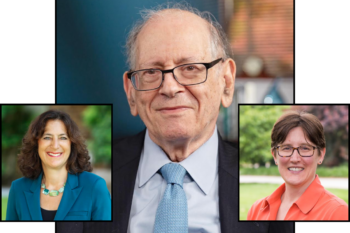
2024 IEEE Medal recipients featured in Princeton article
2024 IEEE medal recipients featured in Princeton article: Medal of Honor recipient Bob Kahn, IEEE James H. Mulligan, Jr. Education Medal recipient Andrea Goldsmith, and IEEE Alexander Graham Bell Medal recipient Jennifer Rexford.

Rebecca Richars-Kortum’s latest achievement in early cancer detection
2023 IEEE Innovations in Healthcare Technology Medalist, Rebecca Richards-Kortum of Rice University, continues to make gains in the fight against cancer. Her latest achievement is detailed in this IEEE Spectrum profile.

Featured in the news: “Israeli researcher awarded IEEE medal, the Nobel Prize of engineering”
2024 IEEE Medal for Environmental and Safety Technologies recipient Hagit Messer of Tel Aviv University explains the importance of both climate change and its implications for life on Earth, and the processing of big data in AI systems.
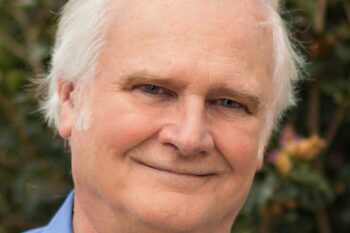
IEEE Healthcare Medal Recipient Featured in Duke University Article
Blake S. Wilson, Co-recipient of the 2024 IEEE Medal for Innovations in Healthcare Technology, was featured in a Duke University news article announcing his award.
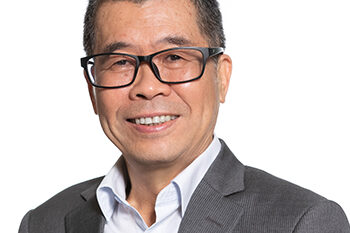
Focus Taiwan refers to the IEEE Noyce Medal as the “Nobel Prize of Semiconductors”
2024 IEEE Robert N. Noyce Medalist Ming-Kai Tsai was recently featured in a Media Tek press release and on Focus Taiwan announcing his award.
Become a Sponsor
Become a Sponsor of the 2024 IEEE Vision, Innovation, and Challenges Summit and Honors Ceremony
INTERACT | Throughout the event, sponsors have multiple opportunities and ways to network with attendees from around the world and across industry and academia.
EMPOWER | Generate brand awareness and provide information to attendees far beyond Boston.
INFLUENCE | Improve your ROI by positioning your brand front-and-center, influencing attendees and showcasing your solutions to a worldwide audience of key decision makers.
ENHANCE | Promote your organization’s visibility throughout the IEEE Vision, Innovation, and Challenges Summit and Honors Ceremony including its growing social media following
INSPIRE | The next generation of Technical Professionals
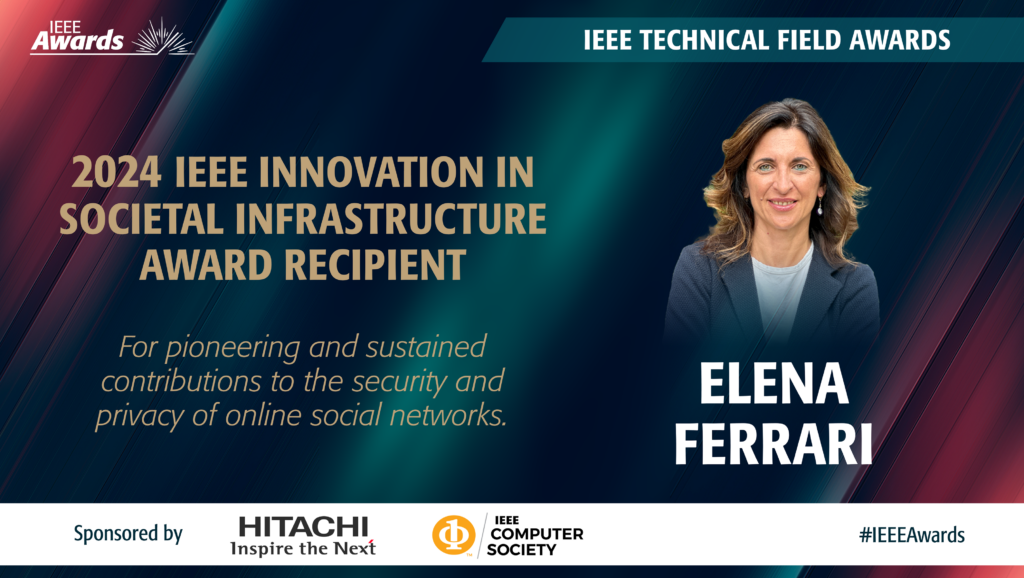
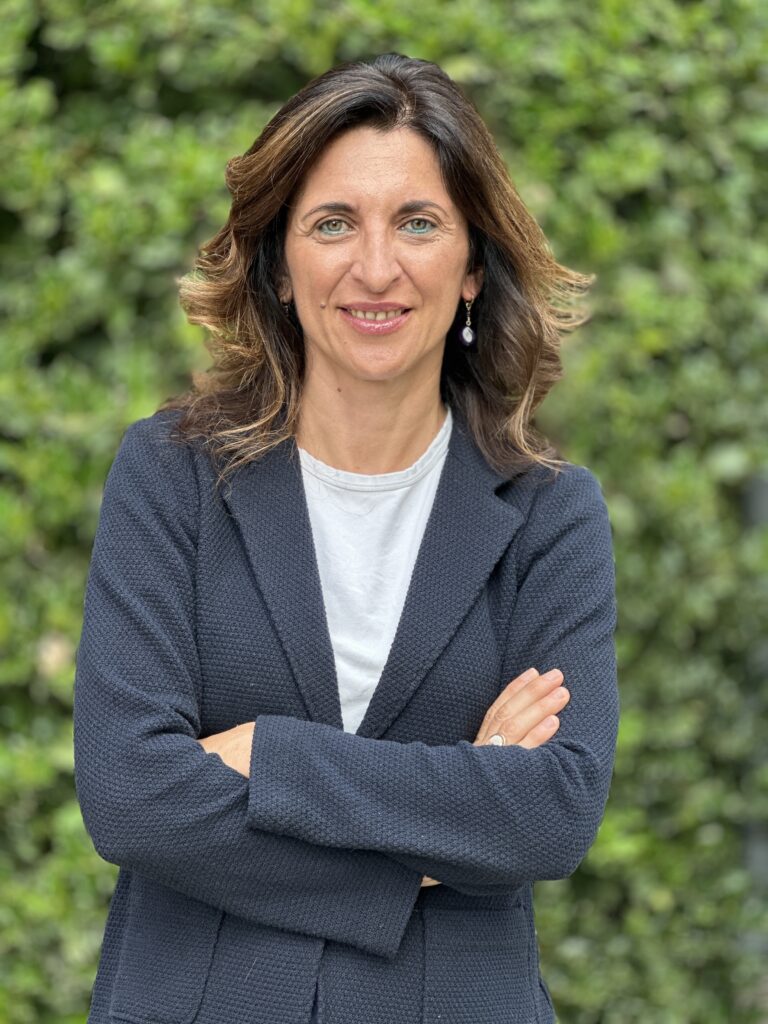
TFA Spotlight: Elena Ferrari
Almost two-thirds of the world’s population now use online social networks. But these networks would not be what they are without the privacy protections they offer to users. And those privacy protections would not be what they are without the work of Elena Ferrari. Ferrari’s research has shown the way to deployment of user-driven security and privacy in large-scale ubiquitous social networks, which are among the most familiar and disruptive phenomena of modern human society
Ferrari is receiving the 2024 IEEE Innovation in Societal Infrastructure Award “for pioneering and sustained contributions to the security and privacy of online social networks.”
A special thank you to the award’s sponsors, Hitachi Ltd. and the IEEE Computer Society.
Elena Ferrari will be presented with the award at the 2024 IEEE International Conference on Data Engineering (ICDE) 2024 IEEE Applied Power Electronics Conference (APEC) on Wednesday, 15 May in Utrecht, Netherlands.

We are pleased to announce that IEEE Awards has been named a 2023 PR Daily Content Marketing Awards Winner!
Celebrating modern-day storytellers, the PR Daily Awards recognize individuals and organizations creating content that stands apart in the crowded content landscape.
Thanks to the success of the 2023 IEEE VIC Summit & Honors Ceremony, we took home the win for Events/Live or Virtual in the Content Marketing Strategy & Assets category.
“For 2023, IEEE took a ‘rolling thunder’ approach to publicizing the event with a continuous stream of content to drive event visibility, increase awareness and elevate the IEEE brand among a broader audience.”
Congratulations to the entire IEEE Awards team on being selected for this honor—and thank you to PR Daily!
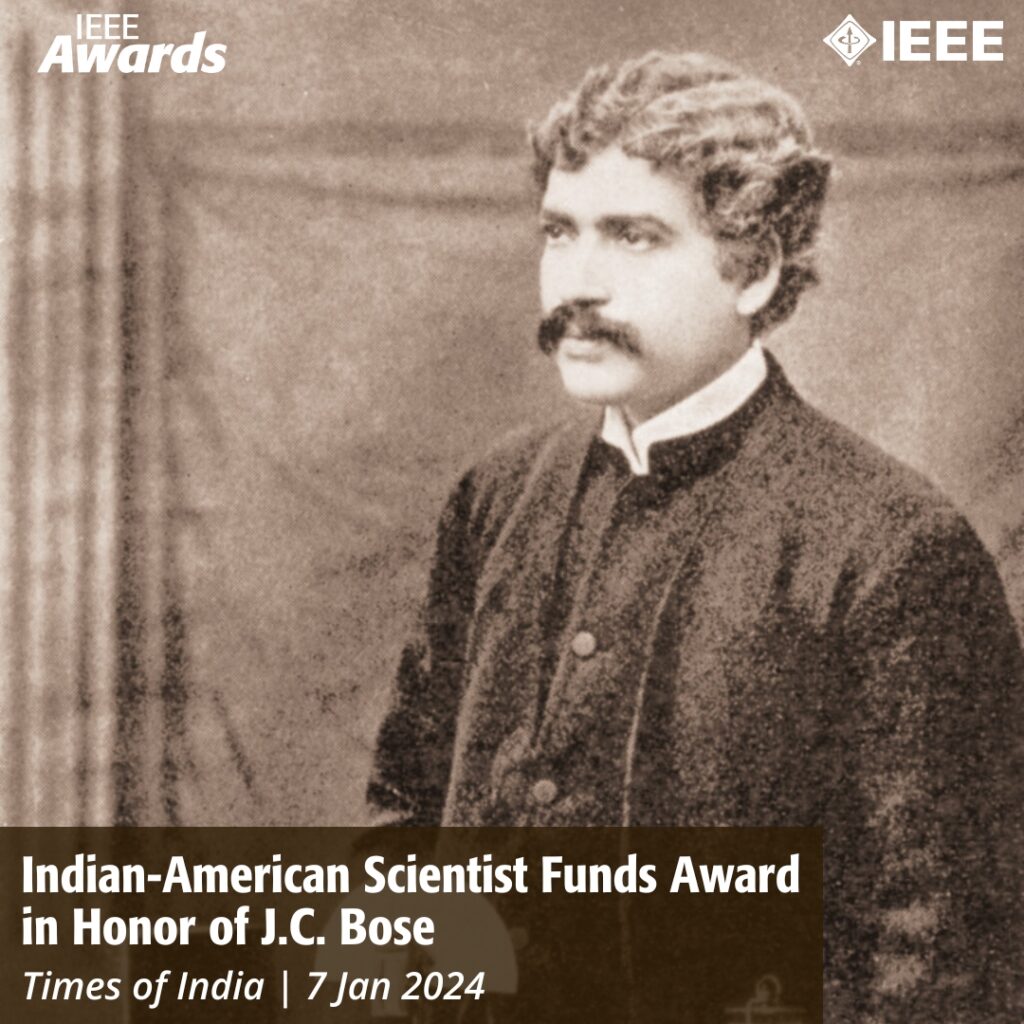
New IEEE Medal to honor the late Jagadish Chandra Bose
Very exciting news! India-born American physicist, philanthropist, and laser technology pioneer Mani Bhaumik has generously funded a new IEEE medal in perpetuity and was featured in The Times of India.
The Jagadish Chandra (J.C.) Bose Medal in Wireless Communications recognizes those contributions to wireless communications technologies that have had a global impact. J.C. Bose publicly demonstrated wireless transmission of electromagnetic waves for the first time ever in 1895. He also is renowned for inventing the detector for wireless telegraphy. You can learn more about J.C. Bose in his ETHW biography.
The new medal was announced by 2023 IEEE President and CEO Saifur Rahman at a congressional reception on 12 Jan at the Rayburn House Office Building in Washington DC, USA. It will be first awarded beginning in 2025.
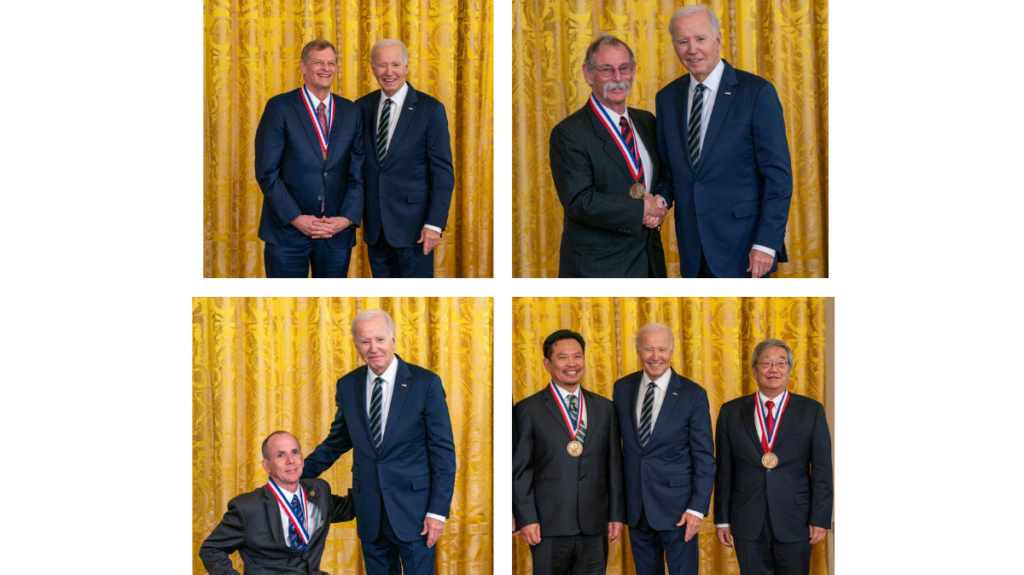
Past IEEE Award recipients receive the National Medal of Technology & Innovation!
United States President Joe Biden presented the National Medals of Science and National Medals of Technology & Innovation in a ceremony at the White House on 23 October 2023. We are proud to say that four of the 18 honorees were previous IEEE award recipients.
Congratulations to our fellow past recipients on receiving the National Medal of Technology and Innovation – the nation’s highest recognition for technological achievement. What a well-deserved honor!
Awards Board Diversity Statement
IEEE awards recognize exceptional contributions to all IEEE fields of interest (technical and nontechnical) made by organizations and individuals regardless of nationality, gender, age, religion, ethnic background, or other personal characteristics not related to ability, performance, or qualifications. The IEEE Awards Program is committed to pursuing diversity in all its operations to help realize and maintain fair nomination and selection processes without bias or discrimination.