




IEEE-Level Awards
This page provides information about the IEEE Awards that are approved by the Awards Board, and subsequently by the IEEE Board of Directors.
There are three levels of Awards IEEE Medals, IEEE Technical Field Awards and IEEE Recognitions. The IEEE Medal of Honor is the highest-level award in the portfolio. IEEE Recognitions include Service Awards, Corporate Recognition, Young Professional Award, Staff Award, and Honorary Membership. Each of the categories below will provide a list of awards, criteria and scope, deadline information, and a link to the nomination form.
- The award recipient statistics will provide an overview of the number of nominations received per year and region.
- A list of all Award Recipients can be viewed by clicking the past and present recipients button below.
- View the Award Scopes for all the IEEE Awards
- View the Awards by Technical Disciplines
The 2024 IEEE Medal and Recognition Recipients will receive their awards at the 2024 IEEE VIC Summit and Honors Ceremony on 3 May 2024 in Boston, Massachusetts, USA.
Watch the livestream of the Honors Ceremony at 6:30 PM EDT on 3 May here.
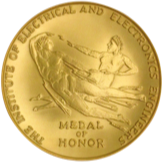
IEEE Medal of Honor
The IEEE Medal of Honor, established in 1917, is the highest IEEE award. It is presented when a candidate is identified as having made a particular contribution that forms a clearly exceptional addition to the science and technology of concern to IEEE.
Sponsor(s)

Nomination Deadline
15 June
Presented to
An individual or a team of up to three.
Scope
For an exceptional contribution(s) or an extraordinary career in the IEEE fields of interest.
Prize
The award consists of a gold medal, a bronze replica, a certificate, and honorarium. In a given year, if the Medal of Honor Recipient is not an IEEE member, that recipient will be automatically recommended to the IEEE Board of Directors for IEEE Honorary Membership.
Basis for Judging
In the evaluation process, the following criteria are considered: substantial significance of achievement, originality, impact on society, impact on the profession, publications, and patents relating to the achievement. The quality of the nomination is also considered.
View Award Recipients

IEEE Frances E. Allen Medal
The IEEE Frances E. Allen Medal was established in 2020 by the IEEE Board of Directors, and is named in honor of Frances E. Allen, computing pioneer in the compilers area and an IEEE and IBM Fellow.
Sponsor(s)

Nomination Deadline
15 June
Presented to
An individual or to a team of recipients or multiple recipients up to three in number.
Scope
For innovative work in computing leading to lasting impact on other aspects of engineering, science, technology, or society.
Prize
The award consists of a bronze medal, certificate, and cash honorarium.
Basis for Judging
In the evaluation process, the following criteria are considered: Impact on the profession and/or society, succession of significant technical or other contributions, leadership in accomplishing worthwhile goal(s), previous honors, and other achievements as evidenced by publications or patents or other evidence, and quality of nomination.
View All Recipients
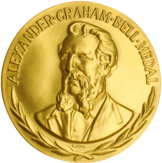
IEEE Alexander Graham Bell Medal
The IEEE Alexander Graham Bell Medal was established in 1976 by the IEEE Board of Directors, in commemoration of the centennial of the telephone's invention, to provide recognition for outstanding contributions to telecommunications.
The invention of the telephone by Alexander Graham Bell in 1876 was a major event in electrotechnology. It was instrumental in stimulating the broad telecommunications industry that has dramatically improved life throughout the world. As an individual, Bell himself exemplified the contributions that scientists and engineers have made to the betterment of mankind.
Sponsor(s)

Nomination Deadline
15 June
Presented to
An individual or team up to three in number.
Scope
For exceptional contributions to communications and networking sciences and engineering.
Prize
The award consists of a bronze medal, certificate, and cash honorarium.
Basis for Judging
In the evaluation process, the following criteria are considered: value of contribution to communication among people, value of contribution to communication sciences and engineering, evaluation of contributor, evaluation of nominator and references, timeliness of recognition, and quality of nomination.
View Award Recipients

IEEE Jagadish Chandra Bose Medal in Wireless Communications
IEEE Jagadish Chandra Bose Medal in Wireless Communications, established in November 2023, for contributions to wireless communications technologies with a global impact.
Sponsor(s)

Nomination Deadline
15 June
Presented to
An individual or a team of up to three.
Scope
For contributions to wireless communications technologies with a global impact.
Prize
The award consists of a bronze medal, a certificate, and an honorarium.
Basis for Judging
In the evaluation process, the following criteria are considered: Significant outstanding technical contributions in wireless communications, implementation, standardization, or commercialization of new technologies, impact on the profession and/or society, leadership in accomplishing worthwhile goal(s), previous honors, and other achievements as evidenced by publications or patents or other evidence.
The first time this medal will be awarded is in 2025.
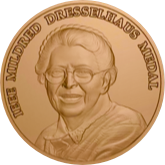
IEEE Mildred Dresselhaus Medal
The IEEE Mildred Dresselhaus Medal was established in 2019 by the IEEE Board of Directors and is named in honor of the late Institute Professor and Professor Emerita of physics and electrical engineering at the Massachusetts Institute of Technology, Mildred Dresselhaus, whose innovations helped mold the history of advancements in science, technology, and education around the world. Dr. Dresselhaus paved the way for the rise of nanotechnology and blazed a path for women in science and engineering. She was known as the “queen of carbon science” based on her life-long research into the properties of graphite and carbon-based materials. The era of carbon electronics can be traced back to her tireless research efforts.
Sponsor(s)

Nomination Deadline
15 June
Presented to
An individual.
Scope
For outstanding technical contributions in science and engineering of great impact to IEEE fields of interest.
Prize
The award consists of a bronze medal, certificate, and cash honorarium.
Basis for Judging
In the evaluation process, the following criteria are considered: Impact on the profession and/or society, sequence of significant technical or other contributions, leadership in accomplishing worthwhile goal(s), previous honors, and other achievements as evidenced by publications or patents or other evidence.
View Award Recipients
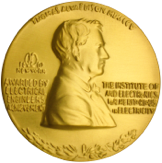
IEEE Edison Medal
The motivation for most scientific and technological advances has been derived from man's imagination and his dedicated desire to achieve a better standard of living. Thomas Alva Edison was endowed with many of those qualities and characteristics, which are so necessary to bridge the gap between imagination and realization.
On 21 October 1879, Mr. Edison succeeded in producing the first practical incandescent electric light bulb—the beginning of modern illumination.
Twenty-five years later, on 11 February 1904, a group of Mr. Edison's friends and associates created a medal in his name to commemorate the achievements of a quarter of a century in the art of electric lighting. In their words, "The Edison Medal should, during the centuries to come, serve as an honorable incentive to scientists, engineers, and artisans to maintain by their works the high standard of accomplishment set by the illustrious man whose name and feats shall live while human intelligence continues to inhabit the world."
Four years later, the American Institute of Electrical Engineers entered into an agreement with the founders to award the medal. The award now carries the designation of IEEE.
The IEEE Edison Medal has been presented since 1909.
Sponsor(s)

Nomination Deadline
15 June
Presented to
An individual.
Scope
For a career of meritorious achievement in electrical science, electrical engineering, or the electrical arts.
Prize
The award consists of a bronze medal, certificate, and cash honorarium.
Basis for Judging
In the evaluation process, the following criteria are considered: leadership, individual contributions, originality, breadth, patents/publications, other achievements, honors, duration of dominance, and quality of nomination.
View Award Recipients

IEEE Medal for Environmental and Safety Technologies
The IEEE Medal for Environmental and Safety Technologies was established in 2008.
Sponsor(s)

Nomination Deadline
15 June
Presented to
An individual or team, up to three in number.
Scope
For outstanding accomplishments in the application of technology in the fields of interest of IEEE that improve the environment and/or public safety.
The IEEE Medal for Environmental and Safety Technologies is relevant to a wide community including intelligent transportation systems, wireless communications, sensor networks control and control and automation, computing, and signal processing.
Prize
The award consists of a bronze medal, certificate, and cash honorarium.
Basis for Judging
In the evaluation process, the following criteria are considered: public benefits of the contribution; degree in improvement in important performance metrics; innovative design, development, or application engineering; favorable influence on the contribution on technical professions; and quality of nomination.
View Award Recipients
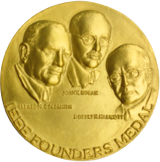
IEEE Founders Medal
The IEEE Founders Medal was established by the Institute of Radio Engineers in 1952. It derives its character and purpose from the inspiring example of leadership and service set by the three founders of the Institute: Alfred N. Goldsmith, who was Director Emeritus and Editor Emeritus of IEEE, Messrs. John V. L. Hogan, and Robert Marriott.
This purpose is perhaps best expressed by the citation that accompanied the first award, which read in part: "For outstanding contributions to the profession and to the Institute through wise and courageous leadership in the planning and administration of technical developments."
The progress of a profession rests not only on the technical abilities of its members, but on the qualities of leadership and dedication that they possess. It is therefore highly appropriate that among the major awards of IEEE, there is one that brings deserved recognition to these important attributes.
Sponsor

Nomination Deadline
15 June
Presented to
An individual or team, up to three in number.
Scope
For outstanding contributions in the leadership, planning, and administration of affairs of great value to the electrical and electronics engineering profession.
Prize
The award consists of a bronze medal, certificate, and cash honorarium.
Basis for Judging
In the evaluation process, the following criteria are considered: outstanding leadership; planning or administration of affairs related to the profession; and quality of nomination. The candidate(s) should be a major industry administrator, or manager of a complex scientific mission. An additional consideration may be service to IEEE beyond normal expectations.
View Award Recipients

IEEE Richard W. Hamming Medal
The IEEE Richard W. Hamming Medal, established in 1986, is named in honor of Dr. Richard W. Hamming, who had a central role in the development of computer and computing science, and whose many significant contributions in the area of information science include his error-correcting codes.
Sponsor(s)

Nomination Deadline
15 June
Presented to
An individual or team, up to three in number.
Scope
For exceptional contributions to information sciences, systems and technology.
Prize
The award consists of a bronze medal, certificate, and cash honorarium.
Basis for Judging
In the evaluation process, the following criteria are considered: originality, breadth, impact on technology, patents/publications, and the quality of the nomination.
The scope includes information transmission, coding, storage, and recovery. Subject areas include information theory, coding theory, data communication, computer networks, data storage and retrieval, and image and speech understanding.
View Award Recipients

IEEE Medal for Innovations in Healthcare Technology
The IEEE Medal for Innovations in Healthcare Technology was established in February 2009.
IEEE and the IEEE Engineering in Medicine and Biology Society have been involved in the life sciences since 1953; the establishment of this medal will promote IEEE as well as past and future contributions to the life-sciences field.
Sponsor(s)

Nomination Deadline
15 June
Presented to
An individual, a team of individuals, or multiple recipients up to five in number.
Scope
For exceptional contributions to technologies and applications benefitting healthcare, medicine, and the health sciences.
Prize
The award consists of a bronze medal, certificate, and cash honorarium.
Basis for Judging
In the evaluation process, the following criteria are considered: impact on the profession and/or society; succession of significant technical or other contributions; leadership in accomplishing worthwhile goal(s); previous honors; other achievements as evidenced by publications or patents or other evidence; and quality of nomination.
The areas of technology recognized by this medal include, but are not limited to: bio-signal processing; biomedical imaging and image processing; bio-instrumentation; bio-sensors; bio micro/nano technologies; bio-informatics; computational biology and systems biology; cardiovascular and respiratory systems engineering; cellular and tissue engineering; bio-materials; bio robotics; bio-mechanics; therapeutic and diagnostic systems; medical device design and development; healthcare information systems; telemedicine; and emerging technologies in biomedicine (e.g., biophotonics).
View Award Recipients
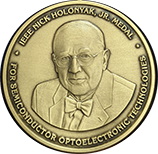
IEEE Nick Holonyak, Jr. Medal for Semiconductor Optoelectronic Technologies
The IEEE Nick Holonyak, Jr. Medal for Semiconductor Optoelectronic Technologies was established in November 2021. The first presentation of this award will be made in 2024.
Sponsor(s)

Nomination Deadline
15 June
Presented to
May be awarded to an individual or to a team of up to three.
Scope
For outstanding contributions to semiconductor optoelectronic devices and systems including high-energy-efficiency semiconductor devices and electronics.
Prize
The award consists of a bronze medal, certificate, and cash honorarium.
Basis for Judging
Impact on the profession and/or society, succession of significant technical or other contributions, leadership in accomplishing worthwhile goal(s), previous honors, and other achievements as evidenced by publications or patents or other evidence.
This medal recognizes specific areas of optoelectronic technology as they are becoming more important including, for example, the development of photonic integrated circuits (PICs), high-efficiency vertical-cavity surface-emitting laser diodes (VCSELs), ultraviolet laser diodes and LEDs, high-density three-dimensional integrated circuits, high-power electronic devices and circuits, high-efficiency solar cells, nanopatterned LEDs for displays, flexible electronics, biocompatible electronics, energy harvesting electronic devices, organic semiconductor materials and devices, and nanostructure semiconductor devices as well as new applications for optoelectronic devices such as lidar, self-driving cars, high-speed “6G” silicon-related photonics, laser machining, laser space and underwater communications, global space-based mm-wave internet access from satellites, as well as the energy savings for reduction of global warming.
View award recipients
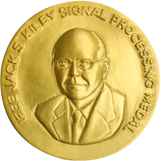
IEEE Jack S. Kilby Signal Processing Medal
The IEEE Jack S. Kilby Signal Processing Medal was established in 1995 in honor of Jack S. Kilby, whose innovation was a monumental precursor to the development of the signal processor and digital signal processing. The award may be presented for outstanding achievements in signal processing. The achievement may be theoretical, technological, or commercial.
Sponsor(s)

Nomination Deadline
15 June
Presented to
An individual or team, up to three in number.
Scope
For outstanding achievements in signal processing.
Prize
The award consists of a bronze medal, certificate, and cash honorarium.
Basis for Judging
In the evaluation process, the following criteria are considered: subject areas such as algorithms, architecture, and applications; theoretical, technological, or commercial achievements; patents/publications/products; generally recognized major technological advancement in the field of signal processing; quality of nomination.
View Award Recipients
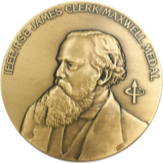
IEEE/RSE James Clerk Maxwell Medal
The IEEE/Royal Society of Edinburgh (RSE) James Clerk Maxwell Medal, established in 2006, is named in honor of the 19th century Scottish mathematician and physicist, James Clerk Maxwell. Maxwell laid the foundations of electromagnetic wave theory, radio propagation, microwave techniques, and radio communications.
Sponsor(s)

Nomination Deadline
15 June
Presented to
An individual, team, or multiple recipients, up to two in number.
Scope
For groundbreaking contributions that have had an exceptional impact on the development of electronics and electrical engineering, or related fields.
Prize
The award consists of a bronze medal, certificate, and cash honorarium.
Basis for Judging
In the evaluation process, the following criteria are considered: ground-breaking contributions with exceptional impact on the profession and the betterment of society, and significant technical and other achievements as evidenced by publications, patents, significant products, and other evidence, and quality of nomination.
View Award Recipients
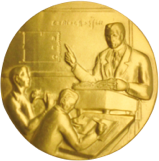
IEEE James H. Mulligan, Jr. Education Medal
The IEEE James H. Mulligan, Jr. Education Medal (formerly the IEEE Education Medal) was established in 1956 by the American Institute of Electrical Engineers, and continued by the Board of Directors of IEEE. It is through this medal that IEEE recognizes the importance of the educator's contributions to the vitality, imagination, and leadership of the members of the engineering profession.
Sponsor(s)


Nomination Deadline
15 June
Presented to
An individual.
Scope
For a career of outstanding contributions to education in the fields of interest of IEEE.
Prize
The award consists of a bronze medal, certificate, and cash honorarium.
Basis for Judging
Excellence in teaching and ability to inspire students; leadership in electrical engineering education through publication of course materials and writings on engineering education; leadership in the development of programs in curricula or teaching methodology; contributions to the engineering profession through research, engineering achievements, and technical papers; participating in the education activities of professional societies; and quality of nomination.
View Award Recipients

IEEE Jun-ichi Nishizawa Medal
The IEEE Jun-ichi Nishizawa Medal was established in 2002 in honor of Jun-ichi Nishizawa's lifetime of outstanding achievements ranging from fundamental semiconductor materials and devices through optical communication and power systems. He has received 28 national or international awards. He is considered the "Father of Japanese Microelectronics," and IEEE Spectrum recognized him as one of the geniuses of the 20th Century.
Nomination Deadline
15 June
Presented to
An individual, multiple recipients, or a team of up to three in number.
Scope
For outstanding contributions to material and device science and technology, including practical application.
Prize
The award consists of a bronze medal, certificate, and cash honorarium.
Basis for Judging
In the evaluation process, the following criteria are considered: quality of the technical achievement, enhancement of technology, impact on the relevant technical community, impact on the profession and benefit to the society, publications and patents, and the quality of the nomination.
View Award Recipients

IEEE Robert N. Noyce Medal
The IEEE Robert N. Noyce Medal was established in 1999, in honor of Robert N. Noyce, founder of Intel Corporation. Noyce was renowned for his 1959 invention of the integrated circuit.
Sponsor(s)

Nomination Deadline
15 June
Presented to
An individual, multiple recipients, or a team of up to three in number.
Scope
For exceptional contributions to the microelectronics industry.
Prize
The award consists of a bronze medal, certificate, and cash honorarium.
Basis for Judging
In the evaluation process, the following criteria are considered: field leadership, contribution, originality, breadth, inventive value, publications, other achievements, society activities, honors, duration, and quality of nomination.
View Award Recipients
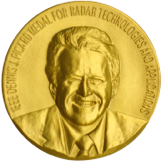
IEEE Dennis J. Picard Medal for Radar Technologies and Applications
The IEEE Dennis J. Picard Medal for Radar Technologies and Applications was established in 1999, in honor of Dennis J. Picard, whose lifetime of work at Raytheon Company helped make them a leader in tactical missile systems.
Sponsor(s)

Nomination Deadline
15 June
Presented to
An individual or group of not more than three in number.
Scope
For outstanding accomplishments in advancing the fields of radar technologies and their applications.
Prize
The award consists of a bronze medal, certificate, and cash honorarium.
Basis for Judging
In the evaluation process, the following criteria are considered: field leadership, contribution, originality, breadth, inventive value, publications, other achievements, society activities, honors, sustained impact, and quality of nomination.
View Award Recipients

IEEE Medal in Power Engineering
The IEEE Medal in Power Engineering was established in August 2008.
Sponsor(s)




Nomination Deadline
15 June
Presented to
An individual.
Scope
For outstanding contributions to the technology associated with the generation, transmission, distribution, application, and utilization of electric power for the betterment of society.
Prize
The award consists of a bronze medal, certificate, and cash honorarium.
Basis for Judging
In the evaluation process, the following criteria are considered: impact on the profession and the betterment of society; succession of significant technical or other contributions; leadership in accomplishing worthwhile goal(s); previous honors; other achievements as evidenced by publications, patents, or other evidence; and quality of nomination.
View Award Recipients
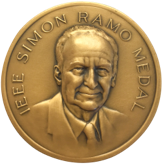
IEEE Simon Ramo Medal
The IEEE Simon Ramo Medal was established by the IEEE Board of Directors in 1982. It is named in honor of the distinguished engineering contributions of Dr. Simon Ramo, former Vice Chairman of the Board and Chairman of the Executive Committee of TRW, Inc.
Sponsor(s)

Nomination Deadline
15 June
Presented to
An individual or multiple recipients up to three in number.
Scope
For exceptional achievement in systems engineering and systems science.
Prize
The award consists of a bronze medal, certificate, and cash honorarium.
Basis for Judging
In the evaluation process, the following criteria are considered: significance of achievement in systems engineering and systems science or for technical leadership in a major innovative engineering project within the scope of the IEEE, originality, breadth, impact on technology, patents/publications, and the quality of the nomination.
View Award Recipients
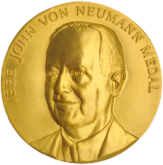
IEEE John von Neumann Medal
The IEEE John von Neumann Medal, established by the Board of Directors in 1990, is named in honor of the eminent mathematician John von Neumann, whose work at the Institute for Advanced Study led to the building of the IAS binary stored-program computer in 1952. The IAS machine served as the model for IBM's first all-electronic stored-program computer (the 701).
Sponsor(s)
Nomination Deadline
15 June
Presented to
An individual or team up to three.
Scope
For outstanding achievements in computer-related science and technology.
Prize
The award consists of a bronze medal, certificate, and cash honorarium.
Basis for Judging
In the evaluation process, the following criteria are considered: truly outstanding contributions in computer hardware, software, or systems art; cited work in the form of publications, patents, products, or simply general recognition by the profession that the individual cited is the agreed originator of the advance; and quality of nomination.
The achievements may be theoretical, technological, or entrepreneurial. Subject areas cover computer architecture, base technologies, systems, languages, algorithms and protocols, and application domains.
View Award Recipients
President’s Award
Given to individuals, not necessarily members of IEEE, whose careers have exhibited distinguished leadership and contributions to the public. To those recipients not already members of IEEE, this recognition shall carry an entitlement of the privileges of IEEE except the right to vote and hold office therein. View Award RecipientsGiven to individuals, not necessarily members of IEEE, whose careers have exhibited distinguished leadership and contributions to the public. To those recipients not already members of IEEE, this recognition shall carry an entitlement of the privileges of IEEE except the right to vote and hold office therein.

IEEE Honorary Membership
The grade of Honorary Member is a significant honor bestowed by IEEE and is awarded for life to an individual. It was established through the Bylaws of the IEEE. Honorary Members are elected by the Board of Directors from among those who have rendered meritorious service to humanity in the IEEE's designated fields of interest and who are not members of the IEEE.
Recipient selection is administered by the IEEE Honorary Membership Committee through the IEEE Awards Board.
Sponsor(s)

Nomination Deadline
15 June
Presented to:
An individual.
NOTE: In a given year, if the IEEE Medal of Honor recipient is not an IEEE member, he/she will be automatically recommended to the IEEE Board of Directors for IEEE Honorary Membership.
Scope:
To individuals not members of the IEEE, who have rendered meritorious service to humanity in IEEE's designated fields of interest
Prize:
Honorary Members shall be entitled to all rights and privileges of the IEEE, except the right to hold office therein. Recipients shall receive a certificate, Honorary Member pin, and a crystal sculpture.
Basis for Judging:
In the evaluation process, the following criteria are considered: significance of achievement; originality; impact on society; impact on the profession, publications, and patents relating to the achievement; and quality of nomination.
View Award Recipients
IEEE Corporate Innovation Award
The IEEE Corporate Innovation Award was established in 1985.
Recipient selection is administered by the IEEE Recognitions Council through the IEEE Awards Board.
Sponsor(s)
Nomination Deadline
15 June
Scope:
For an outstanding innovation by an organization in an IEEE field of interest
Prize:
The award consists of a certificate and crystal sculpture.
Eligibility:
The recipient must be a corporate, governmental, or academic entity working within the fields of interest to IEEE. An employee of a particular entity may nominate their organization for the IEEE Corporate Innovation Award.
View Award Recipients
IEEE Richard M. Emberson Award
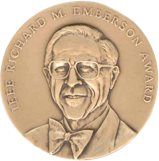
In 1986 the Board of Directors established the IEEE Richard M. Emberson Award.
The Award is named in honor of Dr. Richard M. Emberson, whose 23-year association with the Institute at both the staff and volunteer levels, including Director of Technical Services, Executive Director and General Manager, and Member of the Board of Directors, exemplified loyal and dedicated service to the Institute, especially its Technical Activities.
Sponsor(s)

Nomination Deadline
15 June
Presented to:
An IEEE Member
Scope:
For distinguished service advancing the technical objectives of IEEE
NOTE: For the Emberson Award, only volunteer contributions are to be considered, not contributions made while an IEEE employee. The quality of the nomination will also be considered by the selection committee.
Prize:
The award consists of a bronze medal, illuminated certificate, honorarium, and travel expenses to the award ceremony.
Basis for Judging:
In the evaluation process, the following criteria are considered: contributions an individual has made while an IEEE employee will not be eligible for the award, only volunteer contributions are considered. The quality of the nomination will also be considered by the selection committee.
View Award Recipients

IEEE Haraden Pratt Award
The IEEE Haraden Pratt Award was established in 1971 in honor of Haraden Pratt, then Director Emeritus of IEEE, who had given dedicated and distinguished service. As President, Treasurer, and then Secretary for 23 consecutive years, his service on the Board of Directors, including that of Director Emeritus, totaled 31 years.
Sponsor(s)
Nomination Deadline
15 June
Presented to:
An IEEE Senior member or Fellow
Scope:
For outstanding volunteer service to IEEE
Prize:
The award consists of a bronze medal, illuminated certificate, honorarium, and travel expenses to the award ceremony.
Basis for Judging
In the evaluation process for the IEEE Service Awards, contributions an individual has made while an IEEE employee will not be eligible for the award, only volunteer contributions are considered. The quality of the nomination will also be considered by the selection committee.
View Award Recipients

IEEE Theodore W. Hissey Outstanding Young Professional Award
The IEEE Theodore W. Hissey Outstanding Young Professional Award is the newest IEEE-level recognition, named in honor of IEEE Life Fellow Theodore W. Hissey for his tremendous support of the IEEE Young Professional Community.
The IEEE Theodore W. Hissey Outstanding Young Professional Award was established in 2017.
The Recipient selection is administered by the IEEE Recognitions Council through the IEEE Awards Board.
Sponsor(s)


Nomination Deadline
15 June
Presented to:
An individual IEEE member. The IEEE Theodore W. Hissey Outstanding Young Professional Award is presented at the IEEE Honors Ceremony. Candidate must be an IEEE member and Young Professional as defined by the IEEE (within 15 years of first academic degree).
Scope:
May be awarded to a young professional for contributions to the technical community and IEEE fields of interest.
Prize:
The award consists of a certificate and crystal sculpture.
Basis for Judging:
In the evaluation process, the following criteria are considered: Impact on the profession and/or society; succession of significant technical or other contributions; leadership in accomplishing worthwhile goal(s); previous honors, and other achievements such as publications or patents or other evidence; track record of volunteer contributions to the IEEE; and quality of nomination. Previous IEEE Medal recipients are not considered eligible candidates.
View Award Recipients
IEEE Eric Herz Outstanding Staff Member
IEEE staff and self-nominations are not permitted.
The IEEE Awards Board shall recommend candidates for the IEEE Eric Herz Outstanding Staff Member Award to the Board of Directors for final approval. The IEEE Eric Herz Outstanding Staff Member Award shall be administered by the Awards Board.
The award may be awarded on an annual basis when a suitable candidate is nominated.
Sponsor(s)
Nomination Deadline
15 January
Presented to:
A present or past full-time or part-time staff member of the IEEE with at least ten years of service
Scope:
For sustained contributions by a present or past full-time staff member
Prize:
The award consists of a certificate, honorarium, and travel expenses to attend the presentation of the award.
Basis for judging:
In the evaluation process, the following criteria are considered: substantial impact on the goals and objectives of the IEEE while a staff member, substantial impact on the success of a number of IEEE initiatives, leadership in a number of staff activities, and quality of nomination. Present and past full-time or part-time staff members, excluding current and/or past Management Council members,
of the IEEE with at least ten years of service, at the time of nomination, are eligible.
Notification: Recipients are typically approved during the June IEEE Board of Directors meeting. Recipients and their nominators will be notified following the meeting. Then the nominators of unsuccessful candidates will be notified of the status of their nomination.
Presentation: At the last IEEE Board of Directors Meeting of the year
View Award Recipients

IEEE Biomedical Engineering Award
The IEEE Biomedical Engineering Award was established in November 2010.
Recipient selection is administered by the Technical Field Awards Council of the IEEE Awards Board.
Sponsor(s)


Nomination Deadline
15 January
Presented to
An individual, a team, or multiple recipients up to three in number
Scope
For outstanding contributions to the field of biomedical engineering
Prize
The award consists of a bronze medal, certificate, and cash honorarium.
Basis for judging
In the evaluation process, the following criteria are considered: impact on the profession and/or society; succession of significant technical or other contributions; leadership in accomplishing worthwhile goal(s); previous honors; other achievements as evidenced by publications, patents, or other evidence; and the quality of nomination.
View Award Recipients
IEEE Cledo Brunetti Award
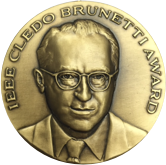
The IEEE Cledo Brunetti Award was established in 1975 through a bequest made by the late Cledo Brunetti, who was an executive of the FMC Corporation.
Recipient selection is administered through the Technical Field Awards Council of the IEEE Awards Board.
Sponsor(s)

Nomination Deadline
15 January
Presented to
An individual or a team of not more than three
Scope
For outstanding contributions to nanotechnology and technologies for microsystem miniaturization
Prize
The award consists of a bronze medal, certificate, and cash honorarium.
Basis for judging
In the evaluation process, the following criteria are considered: innovation,
development, social value, uniqueness of concept, other technical accomplishments, and the quality of the nomination.
View Award Recipients
IEEE Control Systems Award
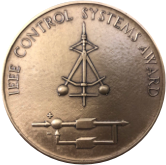
The IEEE Control Systems Award was established by the Board of Directors in 1980.
Recipient selection is administered through the Technical Field Awards Council of the IEEE Awards Board.
Sponsor(s)
Nomination Deadline
15 January
Presented to
An individual.
Scope
For outstanding contributions to control systems engineering, science, or technology
Prize
The award consists of a bronze medal, certificate, and cash honorarium.
Basis for judging
In the evaluation process, the following criteria are considered: seminal nature of the contribution, singular achievement, practical impact, breadth of contributions, depth of contributions, historical precedence, and quality of the nomination.
View Award Recipients
IEEE Electromagnetics Award
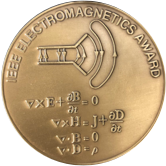
The IEEE Electromagnetics Award was established by the IEEE Board of Directors in 1996.
Recipient selection is administered through the Technical Field Awards Council of the IEEE Awards Board.
Sponsor(s)




Nomination Deadline
15 January
Presented to
An individual.
Scope
For outstanding contributions to the theory and/or application of electromagnetics
Prize
The award consists of a bronze medal, certificate, and cash honorarium.
Basis for judging
In the evaluation process, the following criteria are considered: impact on the profession, innovation/originality, quality of publications, breadth, depth and duration of contributions, honors, other achievements, and the quality of the nomination.
View Award Recipients

IEEE James L. Flanagan Speech and Audio Processing Award
The IEEE James L. Flanagan Speech and Audio Processing award was established in 2002.
Recipient selection is administered through the Technical Field Awards Council of the IEEE Awards Board.
Sponsor(s)

Nomination Deadline
15 January
Presented to
An individual or a team of not more than three
Scope
For an outstanding contribution to the advancement of speech and/or audio signal processing
Prize
The award consists of a bronze medal, certificate, and cash honorarium.
Basis for judging
In the evaluation process, the following criteria are considered: impact on the fields of speech and/or audio processing technology, innovation, leadership, honors or seminal contributions, publications or patents, transition to practice, and the quality of the nomination.
View Award Recipients

IEEE Fourier Award for Signal Processing
The IEEE Fourier Award for Signal Processing was established in 2012.
Recipient selection is administered through the Technical Field Awards Council of the IEEE Awards Board.
Sponsor(s)
Nomination Deadline
15 January
Presented to
An individual or a team up to three in number
Scope
For an outstanding contribution to the advancement of signal processing, other than in the areas of speech and audio processing
Prize
The award consists of a bronze medal, certificate, and cash honorarium.
Basis for judging
In the evaluation process, the following criteria are considered: impact on the field of signal processing technology, including innovation; leadership; honors or seminal contributions as evidenced by publications or patents or transition to practice; and quality of nomination.
View Award Recipients

IEEE Andrew S. Grove Award
The IEEE Andrew S. Grove Award was established in 1999. It replaced the IEEE Jack A. Morton Award in 2000. This award is named in honor of Andrew Grove's lifetime achievements, including helping to found Intel Corporation.
Recipient selection is administered through the Technical Field Awards Council of the IEEE Awards Board.
Sponsor(s)

Nomination Deadline
15 January
Sponsor(s)
Presented to
An individual or multiple recipients up to three in number
Scope
For outstanding contributions to solid-state devices and technology
Prize
The award consists of a bronze medal, certificate, and cash honorarium.
Basis for judging
In the evaluation process, the following criteria are considered: field leadership, contribution, originality, breadth, inventive value, publications, other achievements; society activities, honors, duration, and the quality of the nomination.
View Award Recipients
IEEE Herman Halperin Electric Transmission and Distribution Award
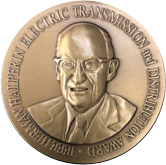
The IEEE Herman Halperin Electric Transmission and Distribution Award was established in 1986 through an agreement between Herman Halperin and the Board of Directors of the IEEE. The funds were contributed by Herman and Edna Halperin and are administered by the IEEE Foundation, Inc.
From 1959 through 1986, the award for outstanding contributions to the field of electric transmission and distribution was named the William M. Habirshaw Award. Herman Halperin was a recipient of the Habirshaw Award in 1962. Mr. Halperin had a distinguished career with the Commonwealth Edison Company over a period of 40 years. Subsequently, he spent 15 years as a consulting engineer. He was particularly noted for his pioneering contributions to the design and operation of electric plant facilities and power cable systems.
Recipient selection is administered through the Technical Field Awards Council of the IEEE Awards Board.
Sponsor(s)

Nomination Deadline
15 January
Presented to
An individual or team of up to three in number
Scope
For outstanding contributions to electric transmission and distribution
Prize
The award consists of a bronze medal, certificate, and cash honorarium.
Basis for judging
In the evaluation process, the following criteria are considered: technological importance, successful application, originality, leadership, publications, and the quality of the nomination.
View Award Recipients

IEEE Masaru Ibuka Consumer Technology Award
The IEEE Masaru Ibuka Consumer Technology Award was established by the IEEE Board of Directors in 1987.
The Award is named in honor of Dr. Masaru Ibuka, Honorary Chairman and Co-Founder of Sony Corporation, whose innovative achievements and leadership in state of the art and have been an inspiration to several generations of electrical, electronics, and computer engineers.
Recipient selection is administered through the Technical Field Awards Council of the IEEE Awards Board.
Nomination Deadline
15 January
Presented to
An individual or team of up to three
Scope
For outstanding contributions in the field of consumer technology
Prize
The award consists of a bronze medal, certificate, and cash honorarium.
Basis for judging
In the evaluation process, the following criteria are considered: technical innovation, creativity, quality, timeliness, societal benefit, technology enhancement associated with achievement(s), leadership and professional contributions of the individual(s) identifiable with the achievements, and the quality of the nomination.
View Award Recipients

IEEE Internet Award
The IEEE Internet Award was established by the IEEE Board of Directors in June of 1999.
Recipient selection is administered through the Technical Field Awards Council of the IEEE Awards Board.
Sponsor(s)
Nomination Deadline
15 January
Presented to
An individual or multiple recipients up to three in number
Scope
For exceptional contributions to the advancement of Internet technology for network architecture, mobility, and/or end-use applications
Prize
The award consists of a bronze medal, certificate, and cash honorarium.
Basis for judging
In the evaluation process, the following criteria are considered: innovation, leadership in the field, contributions to open system, specification, honors or other achievements, and the quality of the nomination.
View Award Recipients
IEEE Richard Harold Kaufmann Award
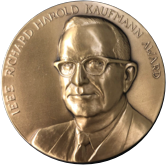
The IEEE Richard Harold Kaufmann Award was established by the IEEE Board of Directors in 1986.
The Award is named in honor of Richard Harold Kaufmann in memory of his many important contributions to industrial systems engineering and his dedicated service to the IEEE Industry Applications Society.
Recipient selection is administered through the Technical Field Awards Council of the IEEE Awards Board.
Sponsor(s)
Nomination Deadline
15 January
Presented to
An individual or team of up to three persons
Scope
For outstanding contributions in industrial systems engineering
Prize
The award consists of a bronze medal, certificate, and cash honorarium.
Basis for judging
In the evaluation process, the following criteria are considered: exceptional contributions to design or application of systems technology, application of systems technology, apparatus, devices or materials for plant power distribution, drive systems, process control or other utilization systems, and the quality of the nomination.
View Award Recipients

IEEE Joseph F. Keithley Award in Instrumentation and Measurement
The IEEE Joseph F. Keithley Award in Instrumentation and Measurement was established in 2000. It has replaced the IEEE Morris E. Leeds Award.
Recipient selection is administered through the Technical Field Awards Council of the IEEE Awards Board.
Sponsor(s)


Nomination Deadline
15 January
Presented to
An individual or a team of not more than three
Scope
For outstanding contributions in electrical measurements
Prize
The award consists of a bronze medal, certificate, and cash honorarium.
Basis for judging
In the evaluation process, the following criteria are considered: originality (with particular emphasis on individual effort); quality (general benefit); influence (on other work in the field); breadth; standards or measurement instrumentation (physical, sensing, information processing, information retrieval and display, etc.); and quality of nomination.
View Award Recipients
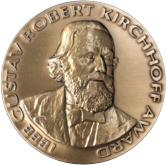
IEEE Gustav Robert Kirchhoff Award
This award is named for Gustav Robert Kirchhoff, a physicist who made important contributions to the theory of circuits, using topology, and to elasticity. Kirchhoff's laws allow calculation of currents, voltages, and resistances of electrical circuits extending the work of Ohm. His work on black body radiation was fundamental in the development of quantum theory.
Recipient selection is administered through the Technical Field Awards Council of the IEEE Awards Board.
Sponsor(s)
Nomination Deadline
15 January
Presented to
An individual or multiple recipients where all members of the group could be judged to have made a crucial contribution(s) to the overall outcome
Scope
For an outstanding contribution to the fundamentals of any aspect of electronic circuits and systems that has a long-term significance or impact
Prize
The award consists of a bronze medal, certificate, and cash honorarium.
Basis for judging
In the evaluation process, the following criteria are considered: impact; perceived long-term and fundamental nature of the contribution(s); originality; publication of a significant and profound new and non-obvious result or an approach in a subject area that relates to the circuits and systems, but which has broader impact across other aspects of electronic or electrical engineering; patents; starting a company based on a fundamental contribution; and the quality of the nomination.
View Award Recipients

IEEE Leon K. Kirchmayer Graduate Teaching Award
The IEEE Graduate Teaching Award was established by the Board of Directors in 1990 and renamed in honor of Leon K. Kirchmayer in 2002. Dr. Kirchmayer was well known and revered throughout the world for his commitment to students and education.
This award honors teachers of electrical and electronics engineering and the related disciplines.
Recipient selection is administered through the Technical Field Awards Council of the IEEE Awards Board.
Sponsor(s)

Nomination Deadline
15 January
Presented to
An individual.
Scope
For inspirational teaching of graduate students in the IEEE fields of interest
Prize
The award consists of a bronze medal, certificate, and cash honorarium.
Basis for judging
In the evaluation process, the following criteria are considered: excellence in teaching graduate students, curriculum development with the inclusion of current research and development knowledge that reflects the state of the art in courses, authorship of course material for graduate students, involvement with and direction of students to prepare them for effective careers in engineering and the sciences, and the quality of the nomination.
View Award Recipients

IEEE Koji Kobayashi Computers and Communications Award
The IEEE Koji Kobayashi Computers and Communications Award was established by the IEEE Board of Directors in 1986. The Award is named in honor of Dr. Koji Kobayashi, who was a leading force in advancing the integrated use of computers and communications.
Recipient selection is administered through the Technical Field Awards Council of the IEEE Awards Board.
Sponsor(s)

Nomination Deadline
15 January
Presented to
An individual, multiple recipients, or a team of up to three
Scope
For outstanding contributions to the integration of computers and communications
Prize
The award consists of a bronze medal, certificate, and cash honorarium.
Basis for judging
In the evaluation process, the following criteria are considered: developments, inventions, systems, or methods of significance in the field of computer and communications for which the candidate deserves principal credit, and the quality of the nomination.
View Award Recipients
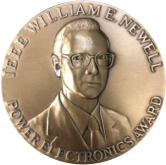
IEEE William E. Newell Power Electronics Award
The IEEE William E. Newell Power Electronics Award was established in 2005. It was established in memory of William E. Newell of the Westinghouse Research and Development Center in Pittsburgh, Pennsylvania.
Recipient selection is administered through the Technical Field Awards Council of the IEEE Awards Board.
Sponsor(s)
Nomination Deadline
15 January
Presented to
An individual.
Scope
For outstanding contributions to power electronics
Prize
The award consists of a bronze medal, certificate, and cash honorarium.
Basis for judging
In the evaluation process, the following criteria are considered: teaching of power electronics; innovative research or consulting endeavors; professional seminars; realization of major projects, major project or program management; impact on the power electronics profession; publications and patents; quality of the nomination.
The technical disciplines which encompass the field of power electronics include the analysis, design, development, simulation and application of electronic devices, magnetics, controls and power circuits for inverters, converters, and motor drives ranging in power level from fractions of a watt to megawatts.
View Award Recipients

IEEE Donald O. Pederson Award in Solid-State Circuits
The IEEE Solid-State Circuits Award was established by the Board of Directors in 1987.
The award was renamed the IEEE Donald O. Pederson Award in Solid-State Circuits in 2005. Don was a co-founder of the IEEE Solid-State Circuits Council, the forerunner of today's Solid-State Circuits Society, in 1966, and he was instrumental in launching the IEEE Journal of Solid-State Circuits that same year.
Recipient selection is administered through the Technical Field Awards Council of the IEEE Awards Board.
Sponsor(s)

Nomination Deadline
15 January
Presented to
An individual, or team of up to three
Scope
For outstanding contributions to solid-state circuits
Prize
The award consists of a bronze medal, certificate, and cash honorarium.
Basis for judging
In the evaluation process, the following criteria are considered: impact, timeliness, quality, societal benefit, technology enhancement and creativity associated with the contribution, leadership and professional contributions of individual(s) identified with this achievement, and the quality of the nomination.
View Award Recipients
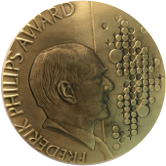
IEEE Frederik Philips Award
The IEEE Frederik Philips Award was established in 1971 through an agreement between N.V. Philips Gloeilampenfabrieken (now called Royal Philips) and the Institute of Electrical and Electronics Engineers, Inc.
Recipient selection is administered through the Technical Field Awards Council of the IEEE Awards Board.
Nomination Deadline
15 January
Presented to
An individual, or team of up to three
Scope
For outstanding accomplishments in the management of research and development resulting in effective innovation in the electrical and electronics industry
Prize
The award consists of a bronze medal, certificate, and cash honorarium.
Basis for judging
In the evaluation process, the following criteria are considered: leadership in management, impact on innovation, personal contributions, technological impact, and the quality of the nomination.
View Award Recipients
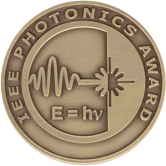
IEEE Photonics Award
The IEEE Photonics Award was established in 2002.
Photonics is defined as the science and technology of generating and harnessing light and other forms of radiant energy whose quantum unit is the photon.
It is awarded for, but not limited to: light-generation, transmission, deflection, amplification and detection and the optical/electro-optical componentry and instrumentation used to accomplish these functions.
Also included are storage technologies utilizing photonics to read or write data and optical display technologies. It also extends from energy generation/propagation, communications, information processing, storage and display, biomedical and medical uses of light and measurement applications.
Recipient selection is administered through the Technical Field Awards Council of the IEEE Awards Board.
Sponsor(s)
Nomination Deadline
15 January
Presented to
An individual, or team of not more than three
Scope
For outstanding achievements in photonics
Prize
The award consists of a bronze medal, certificate, and cash honorarium.
Basis for judging
In the evaluation process, the following criteria are considered: outstanding discovery, significant scientific or technological advancement, important invention, impact on field, and the quality of the nomination.
View Award Recipients

IEEE Robotics and Automation Award
The IEEE Robotics and Automation Award was established in 2002.
Recipient selection is administered through the Technical Field Awards Council of the IEEE Awards Board.
Sponsor(s)

Nomination Deadline
15 January
Presented to
An individual or team of up to three in number
Scope
For contributions in the field of robotics and automation
Prize
The award consists of a bronze medal, certificate, and cash honorarium.
Basis for judging
In the evaluation process, the following criteria are considered: manufacturing automation, robotics and automation in unstructured environment, sensor design, integration and fusion, robot design, modeling, planning and control, methodologies for robotics and automation, and the quality of the nomination.
View Award Recipients

IEEE Frank Rosenblatt Award
The IEEE Frank Rosenblatt Award was established in 2004.
The award is named in honor of Frank Rosenblatt who is widely regarded as one of the founders of neural networks. Basing his research on the study of fly vision, he developed the single-layer input layer and an output layer of neural cells. Frequent presentation of a pattern or patterns resulted in changes in the input to output connections, facilitating future recognition of these patterns, or memory. His work influenced and even anticipated many modern neural network approaches.
Recipient selection is administered through the Technical Field Awards Council of the IEEE Awards Board.
Sponsor(s)

Nomination Deadline
15 January
Presented to
An individual, multiple recipients, or a team of not more than three
Scope
For outstanding contributions to biologically and linguistically motivated
computational paradigms and systems
Prize
The award consists of a bronze medal, certificate, and cash honorarium.
Basis for judging
In the evaluation process, the following criteria are considered: quality of the contribution; impact on the technical field and society as demonstrated by publications, patents, or other evidence; and the quality of the nomination.
View Award Recipients
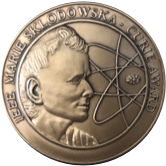
IEEE Marie Skłodowska-Curie Award
The IEEE Marie Skłodowska-Curie Award was established in August 2008.
Recipient selection is administered by the Technical Field Awards Council of the IEEE Awards Board.
Sponsor(s)

Nomination Deadline
15 January
Presented to
An individual, or to individuals on a team, or multiple recipients up to three in number
Scope
For outstanding contributions to the field of nuclear and plasma sciences and engineering
Prize
The award consists of a bronze medal, certificate, and cash honorarium.
Basis for judging
In the evaluation process, the following criteria are considered: importance of individual scientific contribution, importance of scientific contributions made by teams led by the candidate, seminal nature of the contribution, innovation/originality, societal benefit, impact on the profession, and the quality of the nomination.
View Award Recipients

IEEE Innovation in Societal Infrastructure Award
The IEEE Innovation in Societal Infrastructure Award was established in 2011.
Recipient selection is administered through the Technical Field Awards Council of the IEEE Awards Board.
Sponsor(s)


Nomination Deadline
15 January
Presented to
An individual, team, or multiple recipients up to three
Scope
For significant technological achievements and contributions to the establishment, development, and proliferation of innovative societal infrastructure systems through the application of information technology with an emphasis on distributed computing systems
Prize
The award consists of a bronze medal, certificate, and cash honorarium.
Basis for judging
In the evaluation process, the following criteria are considered: impact on society with an emphasis on contributions to efficient infrastructure systems (e.g. breadth of use, energy savings, resource utilization, cost efficiency) as well as market size/revenue; originality of systems concept; leadership; impact on innovation; extension to further technological development; and quality of nomination.
View Award Recipients
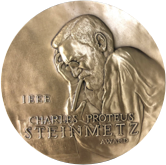
IEEE Charles Proteus Steinmetz Award
The IEEE Charles Proteus Steinmetz Award was established by the Board of Directors in 1979.
Recipient selection is administered through the Technical Field Awards Council of the IEEE Awards Board.
Sponsor(s)

Nomination Deadline
15 January
Presented to
An individual.
Scope
For exceptional contributions to the development and/or advancement of standards in electrical and electronics engineering
Prize
The award consists of a bronze medal, certificate, and cash honorarium.
Basis for judging
In the evaluation process, the following criteria are considered: engineering and administrative accomplishment and responsibilities, publications (books, standards, papers, conference); honors; supporting letters; IEEE Activities, other organizations, and the quality of the nomination.
View Award Recipients

IEEE Eric E. Sumner Award
The IEEE Eric E. Sumner Award was established by the IEEE Board of Directors in 1995.
It is named in honor of 1991 IEEE President Eric E. Sumner, who retired as Vice President, Operations Planning, AT&T Bell Laboratories after a long and distinguished career.
Recipient selection is administered by the Awards Board through its Technical Field Awards Council.
Sponsor(s)
Nomination Deadline
15 January
Presented to
An individual or a team of not more than three
Scope
For outstanding contributions to communications technology
Prize
The award consists of a bronze medal, certificate, and cash honorarium.
Basis for judging
In the evaluation process, the following criteria are considered: research, development, and application contributions to all aspects of leading-edge communication technology (work cited could have appeared in the form of publications, patents, or products, or could be a generally recognized major technological advancement in the field), and the quality of the nomination.
View Award Recipients

IEEE Nikola Tesla Award
The IEEE Nikola Tesla Award was established in 1975 through an agreement between the IEEE Power Engineering Society and the IEEE Board of Directors.
The Award is named in honor of Nikola Tesla, an electrical engineer, a distinguished Yugoslav-American inventor, and a pioneer in many fields, who is most renowned for the development of the coil that bears his name and the a-c induction motor.
Recipient selection is administered through the Technical Field Awards Council of the IEEE Awards Board.
Sponsor(s)

Nomination Deadline
15 January
Presented to
An individual or a team up to three
Scope
For outstanding contributions to the generation and utilization of electric power
Prize
The award consists of a bronze medal, certificate, and cash honorarium.
Basis for judging
In the evaluation process, the following criteria are considered: impact on technology, inventive value, breadth of use, leadership, and quality of the nomination. "Generation" areas may include: automation, instrumentation, control, generation planning, alternative forms (e.g., wind, solar, fuel cells, and space power), conservation, safety, and reliability. "Utilization" areas may include: conservation, biomedical (e.g., MRI, focused ultrasound, etc.), life quality improvement for the handicapped, manufacturing systems, and robotronics.
View Award Recipients

IEEE Kiyo Tomiyasu Award
The IEEE Kiyo Tomiyasu Award was established in 2001 to recognize outstanding early to mid-career contributions to technologies holding the promise of innovative applications.
Recipient selection is administered through the Technical Field Awards Council of the IEEE Awards Board.
Sponsor(s)
The late Dr. Kiyo Tomiyasu,
Nomination Deadline
15 January
Presented to
May be awarded to an individual, multiple recipients, or a team of not more than three, who received their highest academic degree no more than fifteen years prior to the year of original nomination, and not more than age forty-five at the time of the nomination, to any areas of IEEE interest that promise innovative applications. If the award is to be presented to a team, this restriction will apply to all.
Scope
For outstanding early to mid-career contributions to technologies holding the promise of innovative applications
Prize
The award consists of a bronze medal, certificate, and cash honorarium.
Basis for judging
In the evaluation process, the following criteria are considered: innovation or development, social value, uniqueness of concept, other technical accomplishments, and the quality of the nomination.
View Award Recipients
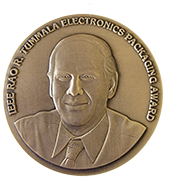
IEEE Rao R. Tummala Electronics Packaging Award
The IEEE Electronics Packaging Award was established in 2002 and renamed in 2020 as the IEEE Rao R. Tummala Electronics Packaging Award in honor of Professor Tummala.
Recipient selection is administered through the Technical Field Awards Council of the IEEE Awards Board.
Sponsor(s)


Nomination Deadline
15 January
Presented to
An individual or a team of not more than three
Scope
For outstanding contributions to advancing components, electronic packaging, or manufacturing technologies
Prize
The award consists of a bronze medal, certificate, and cash honorarium.
Basis for judging
In the evaluation process, the following criteria are considered: enhancement of technology, impact on the relevant technical community and the profession, benefit to society, and the quality of the nomination. The technical field for this award includes all aspects of device and systems packaging, including packaging of microelectronics, optoelectronics, RF/wireless, and micro-electro-mechanical systems
(MEMS).
View Award Recipients

IEEE Transportation Technologies Award
The IEEE Transportation Technologies Award was established in 2011.
Recipient selection is administered through the Technical Field Awards Council of the IEEE Awards Board.
Sponsor(s)


Nomination Deadline
15 January
Presented to
An individual, a team, or multiple recipients up to three in number
Scope
For advances in technologies within the fields of interest to the IEEE as applied in transportation systems
Prize
The award consists of a bronze medal, certificate, and cash honorarium.
Basis for judging
In the evaluation process, the following criteria are considered: impact on the profession and/or society; sustained technical or other contributions in monitoring, control, power, navigation, and/or communication as applied in transportation systems; leadership in accomplishing worthwhile goal(s); other achievements as evidenced by publications, patents, or other evidence; and quality of nomination.
View Award Recipients

IEEE Undergraduate Teaching Award
The IEEE Undergraduate Teaching Award was established by the Board of Directors in 1990 to honor teachers of electrical and electronics engineering and the related disciplines.
Recipient selection is administered through the Technical Field Awards Council of the IEEE Awards Board.
Sponsor(s)

Nomination Deadline
15 January
Presented to
An individual.
Scope
For inspirational teaching of undergraduate students in the fields of interest of IEEE
Prize
The award consists of a bronze medal, certificate, and cash honorarium.
Basis for judging
In the evaluation process, the following criteria are considered: excellence in teaching undergraduate students; creative development of the undergraduate curriculum; authorship of course materials for undergraduate students; involvement with undergraduate students through activities such as advising, project supervision, faculty counseling or advising for student organizations; attracting students to engineering and scientific profession; and the quality of the nomination.
View Award Recipients

IEEE Lotfi A. Zadeh Award for Emerging Technologies
The IEEE Lotfi A. Zadeh Award for Emerging Technologies, renamed in 2022, formerly known as the Daniel E. Noble Award for Emerging Technologies, and previously known as the IEEE Morris N. Liebmann Memorial Award, established in 1919, for outstanding contributions to emerging technologies recognized within recent years. The first presentation of this award will be in 2024.
Recipient selection is administered by the Technical Field Awards Council of the IEEE Awards Board.
Note: This Technical Field Award is not to be confused with the Lotfi Zadeh Pioneer Award by the IEEE Systems, Man, and Cybernetics Society
Sponsor(s)

Nomination Deadline
15 January
Presented to
An individual or team of up to three
Scope
For outstanding contributions to emerging technologies recognized within recent years
Prize
The award consists of a bronze medal, certificate, and cash honorarium.
Basis for judging
In the evaluation process, the following criteria are considered: emerging technologies recently discovered; invented or recognized technology importance; impact; originality; breadth; significance; quality of the nomination.
View Award Recipients

Women Recipients
This is a list of woman engineers, scientists, technologists who have been bestowed an IEEE Corporate Award for their outstanding contributions within the fields of IEEE interest.
Pictured here: Mildred S. Dresselhaus, “Queen of Carbon,” first woman to have received the IEEE Medal of Honor.
Nomination Resources
Here you will find useful tools to assist you in preparing a successful nomination.

Nomination Guidelines
View information on completing a nomination form for an IEEE Medal, Technical Field Award, or Recognition.
Submitting a Successful Nomination
Read helpful tips and suggestions on the submitting a nomination.
Nomination Resources
Here you will find useful tools to assist you in preparing a successful nomination.

Become a Sponsor
IEEE is committed to a portfolio of awards designed to enhance the reputation of the society and the members by the luminance of the recipients. Gifts to sponsor and elevate current awards allow for key discoveries, collaborations, and engineering enrichments to be lauded by the entire IEEE Community.
Your Gift will inspire a new generation of young people to appreciate the importance, and history of engineering and technology and understand how technological achievements enable their lives. Become a sponsor today.